
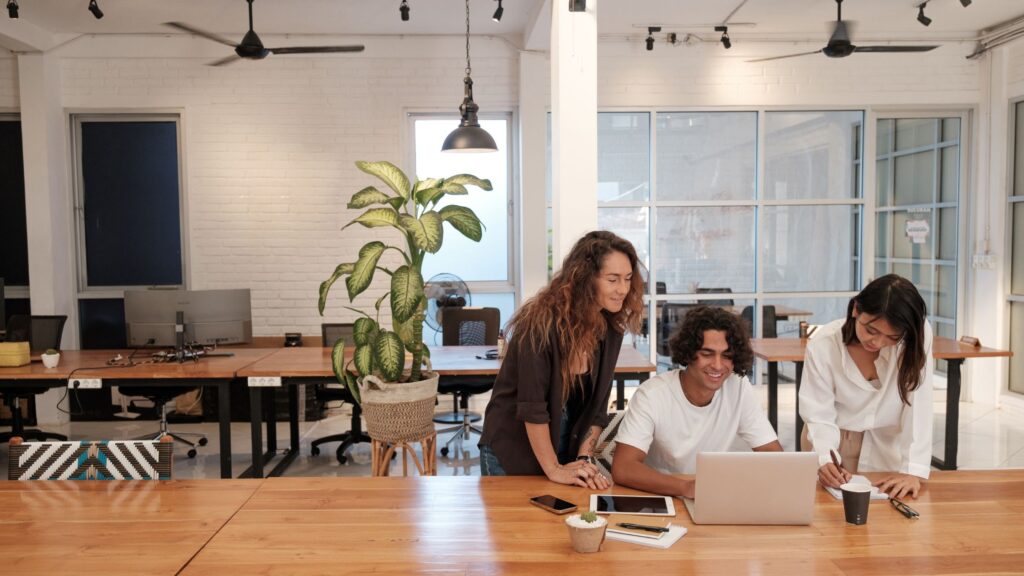
A static office design isn’t an option when you consider the many ways work takes place: in-office, hybrid, or completely remote. Adapting to the habits of your team is essential, so make sure your workspace supports both individual focus and dynamic collaboration. Better utilization of space and technology is required in response to this change, which questions conventional layouts.
However, which particular design decisions are most compatible with these changing workplace paradigms?
Defining Contemporary Workplace Models
Although traditional workplace models relied on fixed hours and assigned desks, contemporary models have evolved to fit the diverse needs of today’s workforce.
You now encounter remote work and hybrid setups that respect employee preferences while boosting productivity. These models reshape team dynamics, encouraging flexible collaboration both online and offline.
Space utilization adapts accordingly, turning offices into versatile environments that support various work styles.
Moreover, modern workplaces emphasize cultural identity, integrating local aesthetics and values to create meaningful connections among employees.
Impact of Hybrid Work on Office Layout
Since hybrid work blends remote and in-office days, it directly transforms how you design office layouts.
Create hybrid spaces that support both focused solo work and dynamic team interactions. Flexible layouts let you adjust areas quickly, accommodating shifting attendance and activities.
Collaborative zones become essential for brainstorming and meetings when employees are on-site. Meanwhile, remote workstations offer equipped spots for those returning occasionally.
Community areas foster connection and informal chats, nurturing company culture despite fewer daily office visits.
Designing Interiors for Flexibility and Collaboration
Create a workplace that effortlessly adapts to changing needs and encourages teamwork by designing interiors for flexibility and collaboration.
Start by using flexible furniture that you can quickly rearrange for different tasks. Use open layouts to promote transparency and facilitate communication.
Design collaborative spaces where teams can brainstorm and connect without barriers. Multifunctional areas let you maximize limited space, switching between meetings and focused work seamlessly.
Please keep in mind acoustic solutions—they reduce noise distractions, keeping collaboration productive.
Integrating Technology in Modern Workspaces
Flexible interiors and collaborative zones set the stage, but technology brings these spaces to life. You rely on smart office solutions to streamline tasks and improve efficiency, while remote collaboration tools keep your team connected regardless of location.
Virtual meeting platforms enable seamless communication, making hybrid work feel natural. Workspace automation systems handle routine functions, freeing you to focus on creativity and strategy.
Digital communication enhancements keep everyone informed and engaged, reducing misunderstandings. By integrating these technologies, you create a modern workspace that adapts to evolving work models and boosts productivity without compromising flexibility.
Enhancing Employee Well-being Through Design
Though productivity is crucial, prioritizing employee well-being through thoughtful office design can transform how you experience work every day.
By applying design psychology, spaces can boost mental health and foster employee engagement. Incorporating biophilic design—like natural light and greenery—helps reduce stress and enhances focus.
Feeling more energized and motivated is possible when your workspace promotes a healthy work-life balance. A higher level of contentment is achieved with well-planned layouts that permit social interaction and breaks.
Ultimately, when design centers on well-being, you’re not just working—you’re thriving, making your office a place that nurtures both your mind and productivity.
Trends Shaping the Future of Office Environments
As office environments evolve, there is a clear shift toward designs that prioritize collaboration, creativity, and employee well-being.
Find sustainable design at the core, reducing environmental impact while boosting comfort. Remote workspaces blend seamlessly with community spaces, creating agile environments that adapt to diverse tasks.
Personal workstations remain essential but get reimagined for flexibility and privacy. This balance supports both focused work and team interactions.
Unlock the Future of Work with Creative Executive Space
As the workplace continues to evolve, one thing remains clear: the right environment is key to unlocking your team’s full potential.
At Creative Executive Space, our deep expertise in executive suites, virtual offices, meeting rooms, coworking spaces, and private offices means we don’t just understand modern office trends—we set them. Our thoughtfully designed spaces foster collaboration, innovation, and productivity, and we tailor them to the unique needs of each client.
By partnering with Creative Executive Space, you gain more than just a place to work; you access a dynamic, supportive environment that inspires success and growth. Let us help you transform your workspace into a true engine of achievement—where your business and your people thrive.